
H&H Asphalt Paving
Bear, DE Asphalt Paving & Sealcoating
Driveways, parking lots & sealcoating — installed and maintained by a local crew
across northern Delaware & Southeastern Pennsylvania.
Local Paving
Paving in Bear, DE
Bear sits along the Route 40 corridor in fast-growing New Castle County, and unlike some of the older towns we serve, most of the paving work here follows new construction. HOA-governed subdivisions between Newark, Glasgow, and New Castle are adding driveways and internal community roads at a steady pace, which puts the emphasis on correct base compaction and grading from day one rather than patching decades-old asphalt.
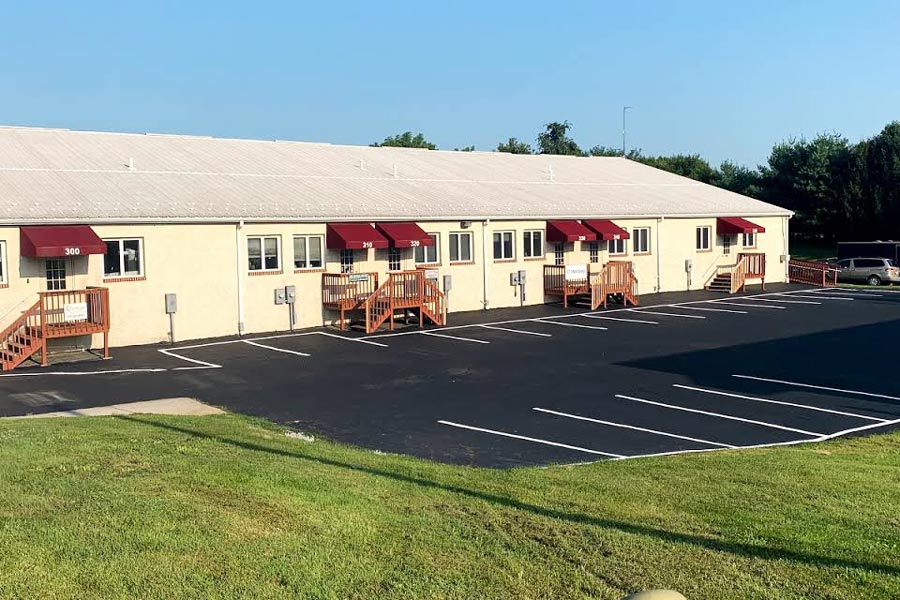
The Route 40 corridor itself carries a different kind of demand — retail plazas, gas stations, and commercial strips built to handle heavy daily traffic and delivery trucks, requiring a thicker structural mix and striping that survives repeated snowplow scraping each winter. We handle both sides of Bear’s growth: new-subdivision driveways and HOA community roads set back from the highway, and the higher-traffic commercial pavement lining Route 40 itself.
Our Process
How we pave a Bear driveway or lot
Every job follows the same disciplined sequence — the base and drainage work you can’t see is what keeps the surface you can see from cracking, sinking, or holding water a few winters later.
- 1
Site inspection
We walk the site — a new-subdivision driveway set back off Route 40, an HOA community road, or a retail plaza or gas-station lot on the corridor itself — and evaluate the grade, the soil, and how the traffic it’ll carry should shape the build.
- 2
Removal & prep
Much of Bear’s work follows new construction, so it’s often a first-time install on a freshly graded lot rather than a tear-out; where there is old commercial asphalt on Route 40, it’s fully removed along with any unstable base material.
- 3
Grading & drainage
On the flatter coastal-plain lots in this corridor there’s little natural fall, so the surface is graded to move water off the pavement and away from foundations — the difference between a lot that drains and one that ponds after every storm.
- 4
Stone base
A compacted stone base is installed or rebuilt — correct compaction from day one is what a new subdivision driveway rides on, and a deeper structural base is what a high-traffic Route 40 commercial lot needs to carry delivery trucks without rutting.
- 5
Asphalt installation
Hot-mix asphalt is laid at a depth suited to the job — standard depth for residential and community driveways, a thicker structural mix for the retail plazas and commercial strips lining Route 40.
- 6
Rolling & compaction
Professional rollers compact the asphalt into a dense, even surface built to stand up to steady daily traffic and delivery trucks along the Route 40 corridor and the community roads set back from it.
- 7
Cleanup & finishing
We clean the site and handle finishing work; striping for commercial lots — laid out to survive repeated snowplow scraping each winter — is scheduled once the asphalt has cured enough to hold a line.
- 8
Aftercare
Most residential jobs take one to a few days, and we schedule commercial and community work around traffic and access. Keep vehicles off for at least 48 hours and follow the aftercare we provide.
Services
Our services in Bear
Residential driveways
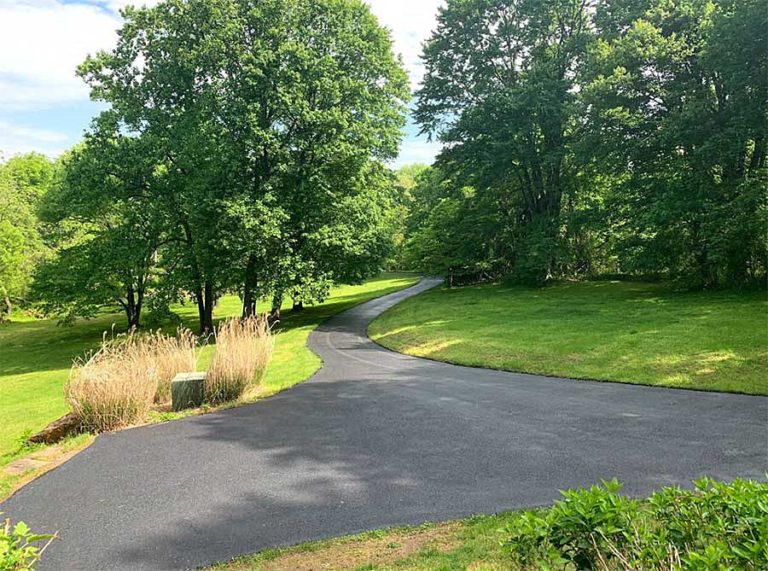
Hot-mix asphalt driveways, resurfacing, and repairs for Bear homeowners — built for our region’s freeze-thaw cycles and graded to drain.
Commercial & parking lots
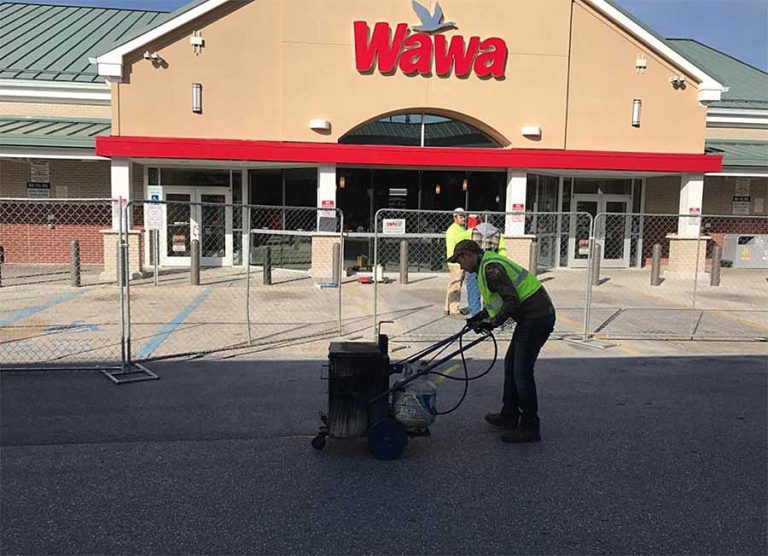
Parking-lot construction, line striping, and sealcoating for Bear businesses, HOAs, and property managers — built for traffic and easy to maintain.
Repair, resurface, or replace
The right fix for your driveway
Bear’s residential paving skews newer — HOA subdivisions still filling in between Newark, Glasgow, and New Castle — while the Route 40 commercial lots take heavy daily wear, so the right fix depends on the base and how hard the surface gets used. If the base is sound, you have affordable options; if it’s failing, resurfacing over it only buys a little time before cracks reflect back through. Here’s how we tell the difference on a Bear property, and what each path means for cost and how long it lasts.
Sealcoat & crack fill
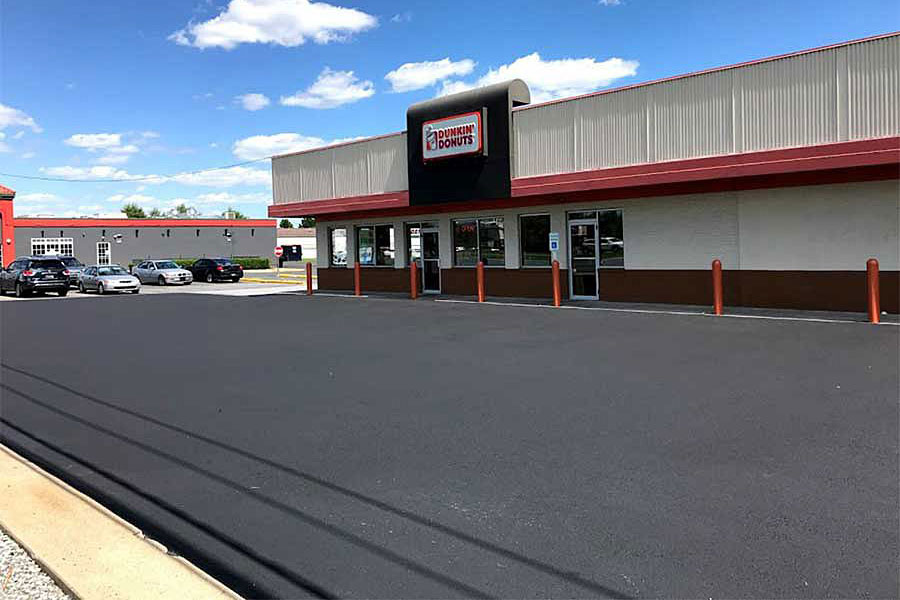
Ideal for Bear’s newer subdivision driveways: seal a sound surface on a regular cycle and fill small cracks early to keep water and road salt out of the base before the freeze-thaw cycle can widen them.
Resurface
When a surface is worn but the base is still solid — typical of the corridor’s older commercial lots — a new asphalt layer over a prepared surface restores it for far less than a full rebuild.
Replace
Alligator cracking, sinking, or standing water — whether from a first install that wasn’t compacted right or a Route 40 lot worn out by delivery-truck traffic — usually mean the base has failed. We remove and rebuild the base and drainage so the new surface actually lasts.
Maintenance
Keeping Bear asphalt in shape year-round
Spring
Inspect subdivision driveways and Route 40 lots for cracks, potholes, and standing water after a winter of plow scraping and road salt, and clear lot drains so runoff moves off the flat coastal-plain grade.
Summer
Warm, dry weather is ideal for crack filling and sealcoating — on high-turnover commercial lots along Route 40, repairing early keeps water out of the base before fall traffic picks back up.
Fall
Clear leaves and debris from driveway aprons and parking-lot drains, and repair open cracks before the freeze-and-thaw cycle and the first plow pass work them wider.
Winter
Plows and road salt are hard on asphalt edges and striping, especially on busy commercial lots. Use plastic snow shovels on driveways, not metal blades, and keep harsh deicers off the surface where you can.
Why H&H
Local, licensed, and built on base work
H&H is owned by Henry, a third-generation paving contractor with over a decade in the trade, serving Bear and the rest of central New Castle County — including Newark, Glasgow, New Castle, and Middletown — plus nearby Pennsylvania. Licensed and fully insured, our crew focuses on the base prep, grading, drainage, and compaction that decide whether a new subdivision driveway or a Route 40 commercial lot holds up to heavy daily traffic and winter plowing — and we give straight answers on whether repair, resurfacing, or replacement is the best value for your property.
Reviews
What local customers say
“Great job, done in one day. Will have them back each year to coat the driveway.”
H&H customer
“We have a big driveway and a new garage and they had everything done in two days — and the best price ever. So pleased with the work and the professionalism.”
H&H customer
“My driveway was completely removed, widened, stone added, rolled and blacktopped. The crew was all business. It looks unbelievable — I’d recommend H&H to anyone.”
H&H customer
FAQ
Bear asphalt paving questions
Does my HOA have to approve a driveway in a Bear subdivision?
Often, yes. A lot of Bear’s residential growth is in HOA-governed subdivisions between Newark, Glasgow, and New Castle, and many of them require architectural or association approval before you pave or repave — sometimes with rules on finish or how the driveway meets the community road. We’re used to working within those guidelines and can coordinate the job around them.
Do I need a permit to pave a driveway or lot along Route 40?
It depends on the work and the location. In unincorporated Bear, New Castle County treats driveways as exempt from a building permit, but a new or widened entrance onto a state road like Route 40 falls under a DelDOT entrance permit, and any expansion still has to meet the county’s Unified Development Code. Simple resurfacing within an existing footprint usually doesn’t require one. We confirm what applies and pull any permits before we start.
Do commercial lots on the corridor need a different build than a driveway?
Yes. A retail plaza or gas-station lot on Route 40 carries constant car and delivery-truck traffic, so we build it on a deeper structural base with a thicker asphalt mix and striping laid out to survive repeated snowplow scraping — a very different spec than a quiet subdivision driveway set back from the highway.
When is the best time of year to pave in Delaware?
Late spring through early fall. Warm, dry conditions let the asphalt compact and cure properly, which matters in our Mid-Atlantic climate where winter brings plow scraping and road salt.
My driveway is newer — does it ever need resurfacing or replacement?
Eventually, but most of Bear’s newer driveways just need protecting for now — regular sealcoating and crack filling. When a surface does fail with alligator cracking or standing water, it usually traces back to base or compaction, in which case a rebuild lasts far longer than resurfacing over a failing base.
How long does asphalt last with Bear’s winters?
With proper base preparation and regular sealcoating, an asphalt driveway or lot commonly lasts 15 to 20+ years, even with the freeze-thaw stress and snowplow scraping a full Mid-Atlantic winter puts on it.
Service Area
Where we pave near Bear
Nearby
Nearby service areas
Ready when you are
Get your free paving estimate
Tell us about your driveway or lot and we’ll get you a fast, no-pressure quote.
Every area we serve